
Elasticsearch vs MySQL: Which Fits Your Stack and Why (2026)
Choose Elasticsearch if you need real-time search, log analytics, full-text queries, and scalable handling of unstructured or semi-structured data. Choose MySQL if you need structured
Choose Elasticsearch if you need real-time search, log analytics, full-text queries, and scalable handling of unstructured or semi-structured data. Choose MySQL if you need structured

Elasticsearch is a search and analytics engine optimized for full-text search, log analysis, and real-time aggregations. MongoDB is a general-purpose NoSQL database optimized for flexible
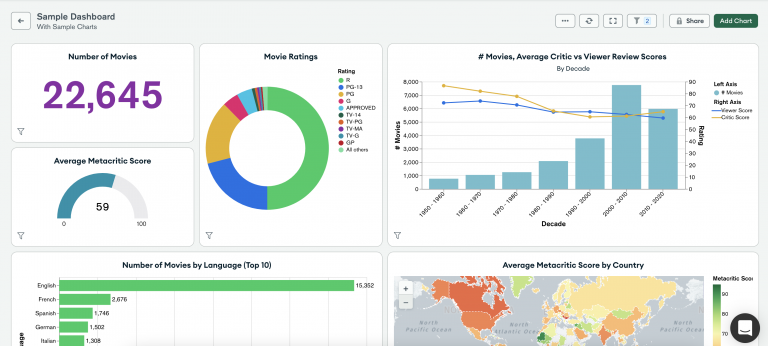
MongoDB Charts is MongoDB’s native visualization tool, built into Atlas, for creating charts and dashboards directly from MongoDB collections. It is best for teams already

Knowi provides native analytics capability into ElasticSearch that goes beyond what Kibana offers. With Knowi, you can explore add-on benefits like blending across multiple indexes, joining across the same or disparate SQL or NoSQL databases, natural language capabilities for self-service analytics, machine-learning anomaly detection, and more.

Grafana, Kibana, and Knowi are some of the best visualization tools available in the market. In this article, we shall give you a comparison of Grafana vs Kibana vs Knowi so that you can make the correct choice for your log management needs.

If you’re looking for a new analytics platform to replace Chartio, then let us introduce ourselves. We’re Knowi and we’re obsessed with creating meaningful data analytics for our customers.