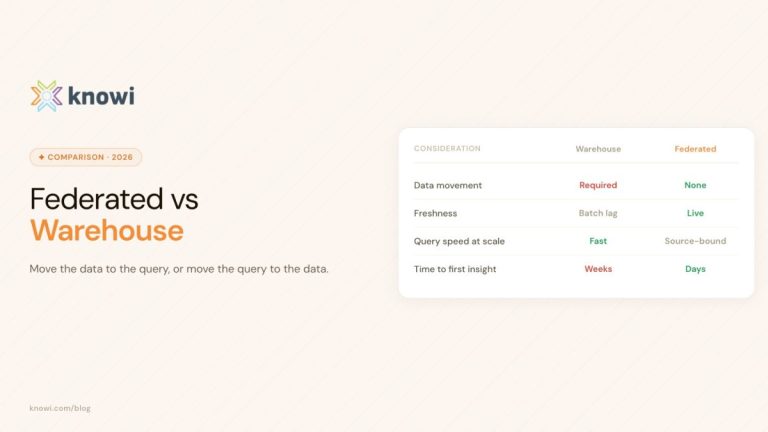
Federated Analytics vs Data Warehouse: Data Virtualization Tools Compared
Whether to federate queries across live sources or centralize data in a warehouse first comes down to latency tolerance, join size, and compliance…
Whether to federate queries across live sources or centralize data in a warehouse first comes down to latency tolerance, join size, and compliance…
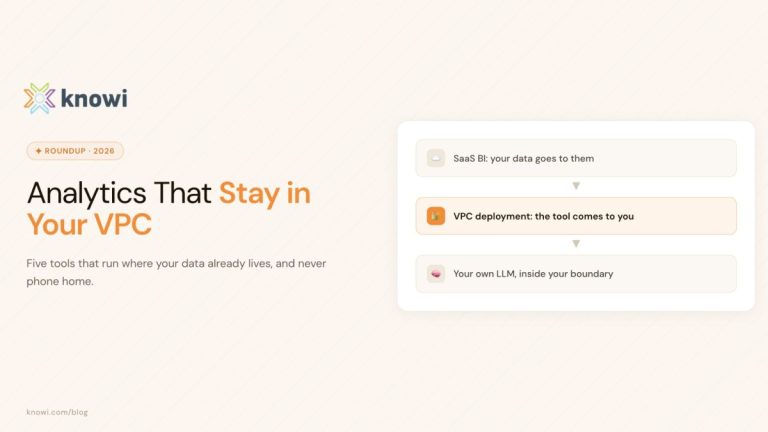
Secure PII analytics under GDPR, CCPA/CPRA, and PCI DSS comes down to four questions: which regulations the exact service covers, whether a signed…
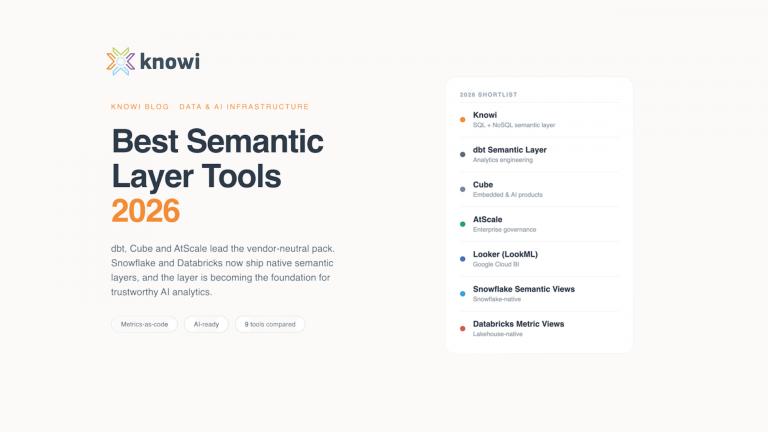
The leading semantic layer tools in 2026 include dbt Semantic Layer, Cube, and AtScale for vendor-neutral deployments, plus Snowflake Semantic Views and Databricks Metric Views for teams standardized on a single warehouse. For
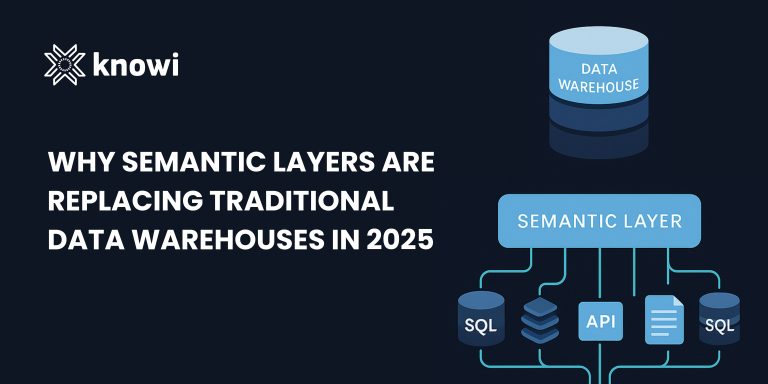
Semantic layers eliminate ETL complexity, reduce costs by 70%, and deliver instant insights. Learn why enterprises are ditching data warehouses.

Modern Data Stack evolved to fix old problems, only to create new, bigger ones. Explore the messy journey of data evolution in this blog.

Learn about Data Mesh, a strategic framework that is reshaping how businesses approach data architecture, management, and analytics.
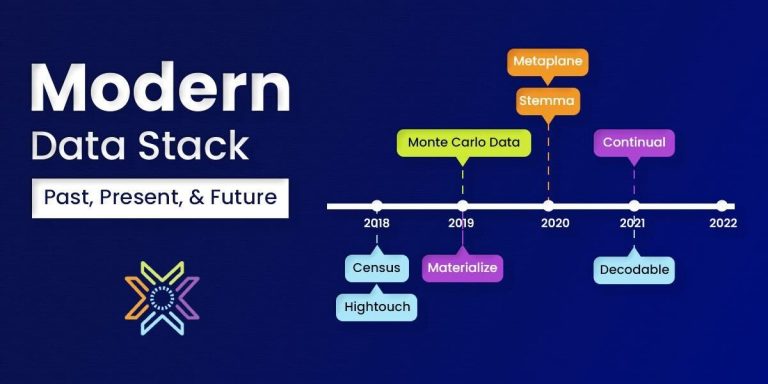
A group of technologies that comprise a data pipeline is referred to as the modern data stack. It enables businesses to gather data from multiple data sources, push it into a data warehouse, and connect the data warehouse to a business intelligence tool for tasks like data visualization to speed up decision-making.

Cloud data security challenges include misconfigured storage buckets, unauthorized access, insider threats, API vulnerabilities, and inadequate visibility into who is accessing what data. This guide

There are plenty of data management issues in healthcare. From overwhelming amounts of information to fragmented data, it’s become a great challenge to collect, organize, and interpret every statistic that is tediously gathered by healthcare teams.

Data Services is the Answer! Yes, but… In our last post, we talked about using a data warehouse strategy as one of the ways to